
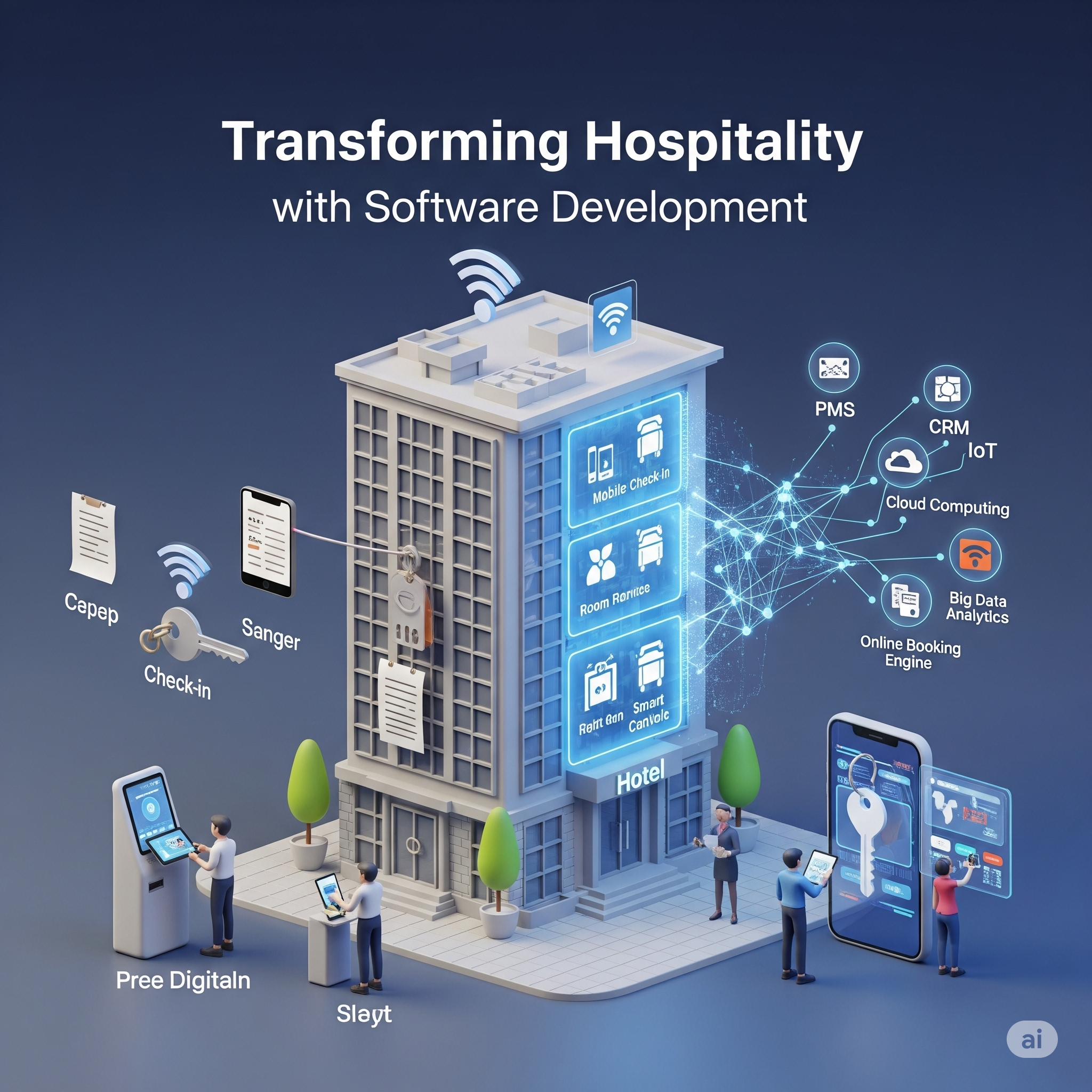
The hospitality industry is undergoing a digital revolution, and at the heart of this transformation lies software development. Hotels, resorts, restaurants, travel companies, and event management firms are all adopting customized software solutions to improve operational efficiency, provide personalized guest experiences, and achieve higher profitability.
With the rise of online booking platforms, mobile applications, cloud-based property management systems (PMS), and AI-driven guest services, hospitality businesses now rely on technology more than ever before. Software development tailored to the hospitality sector enables businesses to keep up with customer expectations and stay ahead in a competitive market.
This blog explores in detail how software development is shaping the hospitality industry, its benefits, trends, challenges, and the future of technology in this ever-growing sector.
The Role of Software Development in Hospitality
Software development in hospitality involves creating tailored solutions that streamline processes, enhance communication, and improve guest services. Unlike generic software, hospitality-focused applications address unique needs such as room reservations, table bookings, guest feedback, event scheduling, staff management, and data analytics.
Key Areas Where Software Development Impacts Hospitality
- Reservation & Booking Systems
Online booking engines integrated with hotel websites and apps allow customers to book rooms directly, reducing dependency on third-party portals. Custom-developed booking software also provides real-time availability, automated confirmations, and flexible pricing models. - Property Management Systems (PMS)
PMS software automates front desk operations, housekeeping, billing, and maintenance management. Cloud-based PMS ensures data accessibility across multiple devices and locations, improving overall efficiency. - Guest Experience Enhancement
From self-check-in kiosks to personalized mobile apps, software development offers innovative tools to make guest interactions seamless. Features like digital room keys, customized offers, and in-room service requests enhance satisfaction. - Restaurant Management Software
For hotels with in-house restaurants, point-of-sale (POS) systems, table management, and inventory tracking software ensure smooth food and beverage operations. - Staff Scheduling and Workforce Management
Hospitality businesses require flexible workforce management solutions. Software development enables efficient scheduling, shift allocation, and real-time communication with staff. - Revenue and Data Analytics
Hospitality software solutions incorporate analytics tools to track guest behavior, booking trends, and financial performance. This data-driven approach helps businesses optimize pricing strategies and improve marketing campaigns.
Benefits of Software Development for the Hospitality Industry
1. Improved Operational Efficiency
Automation reduces manual work in areas such as reservations, billing, housekeeping, and check-in/check-out processes. Staff can focus more on guest satisfaction instead of repetitive tasks.
2. Enhanced Guest Experience
Customized software allows hotels and restaurants to provide unique, tailored experiences. Features like loyalty programs, mobile apps, and personalized recommendations create stronger customer relationships.
3. Increased Revenue Generation
Through smart booking systems, upselling opportunities, and dynamic pricing, businesses can maximize revenue. Revenue management software ensures that pricing strategies are aligned with market demand.
4. Better Decision-Making with Data
Software systems collect and analyze valuable customer and business data, enabling managers to make informed decisions regarding marketing, staffing, and service improvements.
5. Seamless Integration Across Platforms
Hospitality businesses often require integration between booking systems, payment gateways, POS, and PMS. Customized software ensures seamless interconnectivity.
6. Scalability and Flexibility
Custom-developed solutions grow with the business. Whether expanding to new locations or introducing new services, software can be adapted to meet evolving needs.
Popular Types of Hospitality Software
- Hotel Reservation Software – Handles online booking, cancellations, and payments.
- Property Management Systems (PMS) – Streamlines hotel operations.
- Customer Relationship Management (CRM) – Maintains guest data for personalized marketing.
- Event Management Software – Manages conferences, weddings, and events.
- Restaurant POS Systems – Handles orders, payments, and kitchen operations.
- Mobile Applications – Allow guests to check in, order services, and communicate with staff.
- Revenue Management Software – Optimizes pricing strategies.
- Virtual Concierge Solutions – Offers recommendations, bookings, and digital assistance.
Trends in Hospitality Software Development
1. Artificial Intelligence (AI) and Chatbots
AI-driven chatbots provide 24/7 customer support, answering queries and assisting with bookings.
2. Internet of Things (IoT)
IoT integration allows guests to control room features like lighting, temperature, and entertainment through apps or voice commands.
3. Cloud-Based Solutions
Cloud technology ensures accessibility, scalability, and reduced IT infrastructure costs.
4. Mobile-First Development
Mobile apps are essential in hospitality, offering direct booking, loyalty programs, and personalized services.
5. Blockchain in Payments and Security
Blockchain ensures secure transactions, transparent booking records, and loyalty program management.
6. Virtual Reality (VR) and Augmented Reality (AR)
VR/AR technologies offer virtual hotel tours, interactive menus, and immersive event previews.
7. Data-Driven Personalization
Advanced analytics allow businesses to offer customized services based on past guest preferences.
Challenges in Hospitality Software Development
- High Development Costs – Custom softwares can be expensive for small businesses.
- Cybersecurity Risks – Hospitality businesses handle sensitive customer data, making security a top concern.
- Integration Issues – Ensuring seamless connectivity between multiple softwares platforms is complex.
- Staff Training – Employees must adapt to new technologies, which requires time and resources.
- Constant Updates and Maintenance – Hospitality businesses must invest in ongoing support and upgrades.
Case Studies: Softwares Development Success in Hospitality
Case Study 1: Luxury Hotel Chain
A luxury hotel chain implemented a cloud-based PMS integrated with AI chatbots. Result: 30% increase in direct bookings and improved guest satisfaction ratings.
Case Study 2: Restaurant Group
A restaurant chain adopted a custom POS and inventory system. Result: 20% reduction in food wastage and higher operational efficiency.
Case Study 3: Boutique Resort
A boutique resort launched a mobile app offering digital room keys, concierge services, and loyalty rewards. Result: Higher guest engagement and repeat bookings.
The Future of Hospitality and Softwares Development
The future of hospitality lies in creating hyper-personalized experiences powered by technology. Artificial intelligence, IoT, blockchain, and immersive technologies like VR will continue to redefine how guests interact with hotels, resorts, and restaurants.
Sustainability will also play a major role. Softwares solutions that track energy usage, waste reduction, and eco-friendly practices will become standard in the industry.
Furthermore, as global tourism grows, multilingual, multi-currency, and globally compliant softwares will help hospitality businesses serve diverse international guests.
Conclusion
Softwares development is no longer a choice but a necessity for the hospitality industry. From managing daily operations to offering unforgettable guest experiences, technology plays a central role in driving efficiency and growth.
By investing in custom softwares solutions, hotels, resorts, and restaurants can build stronger guest relationships, optimize business processes, and stay competitive in a fast-changing digital landscape.
The hospitality industry’s success in the future will largely depend on how effectively businesses embrace softwares development today.
Leave a Reply