
The Complete Guide to Modern Game Development
Game development has evolved into one of the most exciting, creative, and profitable industries in the modern digital era. From simple 2D arcade-style games to immersive 3D virtual reality experiences, the gaming industry has transformed the way people entertain, learn, and even socialize. With billions of players worldwide and gaming revenues surpassing films and music combined, game development is no longer just a niche passion project—it’s a global phenomenon.
In this comprehensive guide, we’ll explore the entire landscape of game development, including its history, development process, technologies, tools, challenges, and future trends. Whether you’re an aspiring game developer, a business looking to invest in gaming, or simply curious about how games are made, this blog provides everything you need to know.
- Understanding Game Development
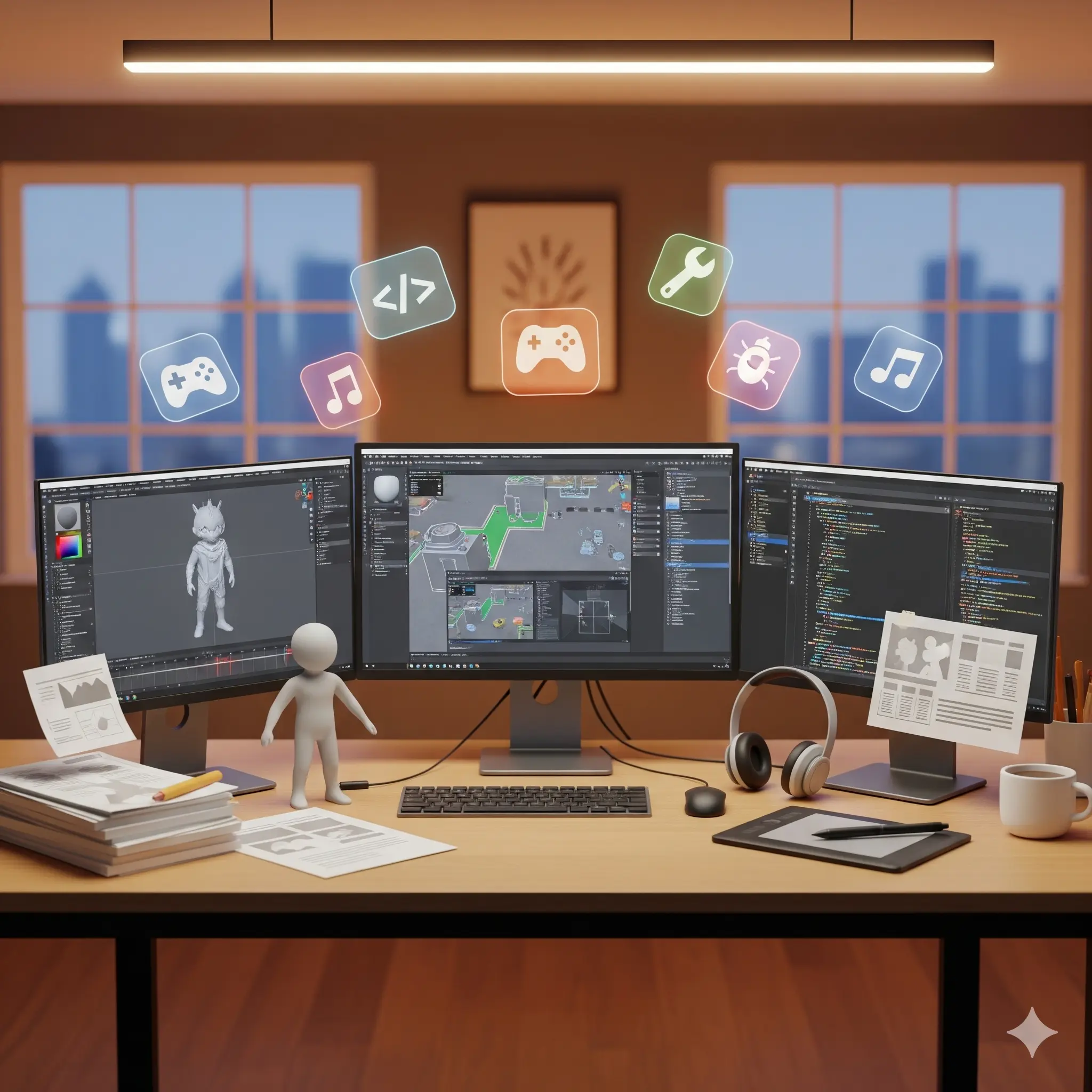
Game development is the process of creating a video game, from concept and design to programming, testing, and release. It involves combining multiple disciplines, including:
- Game Design – Crafting the concept, rules, and user experience.
- Programming – Writing the code that powers game mechanics and logic.
- Art and Animation – Designing characters, environments, and visual effects.
- Sound Design – Creating music, voiceovers, and sound effects.
- Quality Assurance (QA) – Testing the game for bugs, glitches, and playability.
Unlike traditional software development, game development focuses heavily on interactivity, creativity, and player engagement.
- A Brief History of Game Development
- 1970s – The birth of arcade games like Pong and Space Invaders.
- 1980s – Rise of home consoles like Nintendo Entertainment System (NES).
- 1990s – 3D graphics emerge with games like Super Mario 64 and Tomb Raider.
- 2000s – Online gaming and MMORPGs such as World of Warcraft dominate.
- 2010s – Mobile gaming explodes with titles like Angry Birds and Clash of Clans.
- 2020s – VR, AR, cloud gaming, and blockchain games push new frontiers.
Today, game development spans across PCs, consoles, smartphones, and even wearable devices.
- The Game Development Process
The journey from idea to playable game involves several stages:
a. Conceptualization
- Brainstorming game ideas.
- Defining the target audience and genre.
- Creating a game design document (GDD).
b. Pre-Production
- Storyboarding the narrative.
- Building wireframes and concept art.
- Choosing the technology stack (Unity, Unreal, etc.).
c. Production
- Programming the core mechanics.
- Designing levels, environments, and assets.
- Recording voiceovers and sound effects.
- Integrating multiplayer or AI features.
d. Testing and QA
- Identifying and fixing bugs.
- Testing performance across devices.
- Balancing difficulty levels.
e. Deployment and Launch
- Publishing on platforms like Steam, PlayStation, or Google Play.
- Marketing and community building.
- Gathering feedback and post-launch updates.
- Popular Game Development Platforms and Engines
Game engines are the backbone of modern game development. Some of the most widely used engines include:
- Unity – Ideal for 2D and 3D games, widely used in indie and mobile game development.
- Unreal Engine – Known for photorealistic graphics, used in AAA games.
- Godot – Open-source engine favored by indie developers.
- CryEngine – Used for high-performance 3D games.
- Construct – A beginner-friendly engine for 2D game development.
Each platform has its own strengths depending on the type of game being created.
- Games Development Tools
Game developers rely on a wide range of tools for different aspects of development:
- Programming Languages: C++, C#, Python, Java.
- Art & Design: Blender, Maya, Photoshop, Illustrator.
- Sound Design: Audacity, FL Studio, Ableton Live.
- Version Control: GitHub, GitLab.
- Collaboration Tools: Trello, Jira, Slack.
- Careers in Games Development
The gaming industry offers diverse career opportunities, including:
- Game Designer – Develops concepts and mechanics.
- Game Programmer – Codes the functionality of the game.
- 3D Artist/Animator – Creates characters and environments.
- Sound Designer/Composer – Produces soundtracks and effects.
- QA Tester – Ensures smooth gameplay by identifying bugs.
- Producer/Project Manager – Oversees the entire development process.
Salaries in game development vary but are highly rewarding, especially in large studios.
- Indie vs. AAA Games Development
- Indie Games – Developed by small teams or individuals, often with innovative mechanics (Celeste, Stardew Valley).
- AAA Games – High-budget productions created by large studios (Call of Duty, Assassin’s Creed).
Indie games focus on creativity and storytelling, while AAA games emphasize high-end graphics and expansive worlds.
- The Role of AI and Emerging Technologies in Game Development
Game adevelopment continues to evolve with emerging technologies:
- Artificial Intelligence (AI): Enhances NPC behavior and adaptive gameplay.
- Virtual Reality (VR) and Augmented Reality (AR): Immersive gaming experiences.
- Cloud Gaming: Enables players to stream games without expensive hardware.
- Blockchain & NFTs: Introduce play-to-earn models and digital ownership.
- Procedural Generation: Creates vast, dynamic environments (e.g., Minecraft).
- Challenges in Game Development
Despite its opportunities, game development comes with challenges:
- High Costs: AAA titles often require multi-million-dollar budgets.
- Crunch Culture: Developers often face long working hours.
- Platform Compatibility: Games must work on multiple devices.
- User Expectations: Modern players demand high-quality graphics and smooth gameplay.
- Monetization Issues: Balancing free-to-play models with in-game purchases.
- Game Development Trends to Watch
The future of gaming is promising, with several trends reshaping the industry:
- Cross-Platform Gaming – Seamless play across devices.
- Esports Growth – Competitive gaming gaining mainstream recognition.
- AI-Generated Content – Automated level design and storytelling.
- Metaverse Gaming – Virtual worlds for social interaction and commerce.
- Sustainable Development – Reducing environmental impact of gaming hardware and servers.
- Steps to Get Started in Game Development
If you want to break into games development, here’s a roadmap:
- Learn Programming Basics – Start with C# or C++.
- Choose a Game Engine – Unity or Unreal for beginners.
- Build Simple Games – Practice by creating clones of classic games.
- Master Game Art and Design – Learn tools like Blender and Photoshop.
- Join Game Jams – Participate in events like Global Game Jam to practice.
- Collaborate and Network – Connect with other developers and join communities.
- Publish Your Game – Start small, launch on platforms like itch.io or Steam.
- The Future of Games Development
Games development is heading toward more immersive, accessible, and interconnected experiences. AI-driven tools are making development faster, cloud platforms are eliminating hardware barriers, and social features are blending gaming with digital communities.
With advancements in VR, AR, and the Metaverse, future games will likely merge reality with virtual worlds, creating opportunities beyond entertainment—such as education, healthcare, and workplace training.
Conclusion
Game development is more than just creating entertainment—it’s about innovation, storytelling, and pushing the boundaries of technology. The industry continues to grow at a remarkable pace, offering endless opportunities for developers, businesses, and players.
Whether you dream of becoming a developer, launching an indie game, or exploring gaming as a business venture, understanding the fundamentals of game development is the first step. With creativity, persistence, and the right tools, anyone can contribute to the ever-evolving world of gaming.
Leave a Reply