
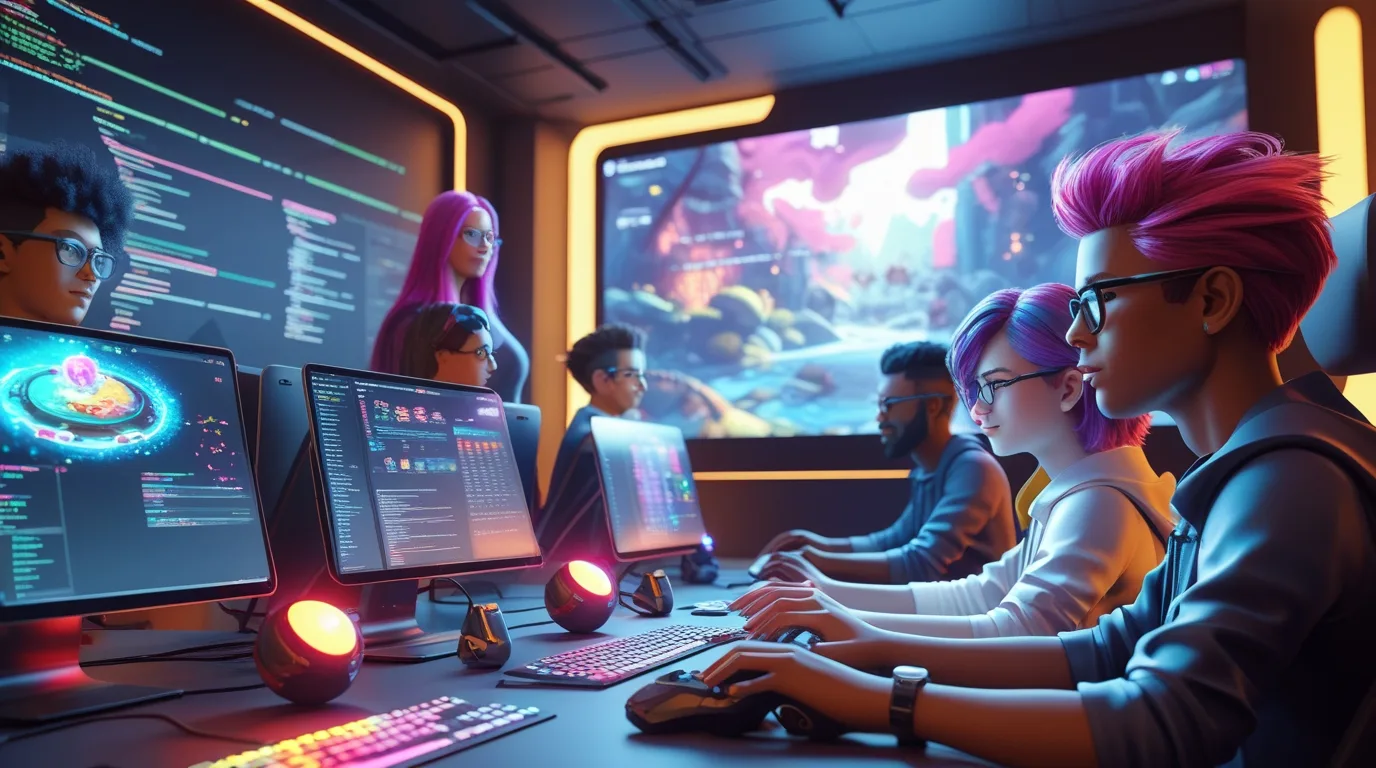
Is game development the next big creative frontier? Over the past four decades, the gaming industry has transformed from a niche hobby into a cultural and economic powerhouse. What began with simple pixelated characters now includes vast open worlds, hyper-realistic visuals, and stories that rival the complexity of acclaimed novels or blockbuster films. Unlike any other medium, games invite players to participate, to shape outcomes, and to experience narrative in a deeply personal way. In 2025, the global gaming market is valued at well over 250 billion USD and continues to grow rapidly. Yet beyond the numbers lies a deeper truth: game development is a unique fusion of art and technology. It demands creative storytelling, sophisticated programming, stunning visual design, and innovative audio experiences. Each project is a massive collaborative effort, blending disciplines in ways that few other industries can match. This article explores the full scope of game development—from its origins to its future trends—revealing why it stands as one of the creative industries of our time.
A Brief History of Games and Technology
The journey of game development began with the simple pleasures of Pong and Space Invaders in the 1970s. Those early experiments captured imaginations, but they were technologically limited. As computing power grew, so did the ambition of developers. The 1980s brought home consoles and the rise of beloved franchises like Super Mario and The Legend of Zelda.
The 1990s ushered in 3D graphics and more complex storytelling. Games like Final Fantasy VII and Half-Life demonstrated that interactive experiences could be emotionally rich and narratively deep. Online multiplayer titles—such as Quake and later World of Warcraft—connected millions of players around the world.
Today, game development spans AAA blockbusters, indie darlings, mobile hits, and experimental art games. High-fidelity visuals, sophisticated physics engines, and powerful storytelling techniques have made gaming one of the most influential forms of entertainment globally.
Core Pillars of Game Development
Game development thrives at the intersection of several key disciplines:
Programming and Game Engines
Behind every interactive world lies robust code. Developers use engines like Unity, Unreal Engine, and Godot to create environments, simulate physics, and handle AI behaviors. Efficient programming ensures smooth gameplay, realistic movement, and engaging mechanics.
Art and Design
Artists sculpt 3D models, craft textures, and animate characters. Visual designers create everything from atmospheric lighting to user interfaces. A strong art direction not only captivates players but also reinforces a game’s tone and identity.
Storytelling and Narrative Design
Games excel at interactive storytelling. Writers and narrative designers build branching storylines, memorable characters, and immersive dialogue systems. Unlike film or literature, the player’s choices can directly influence the plot.
Sound and Music
Sound design adds depth and emotion. From subtle environmental effects to sweeping orchestral scores, audio enhances immersion and guides player behavior.
The Game Development Process
Creating a successful game follows a multi-phase journey:
- Pre-Production – Conceptualizing ideas, writing design documents, and outlining gameplay mechanics.
- Prototyping – Building small test versions to validate concepts and mechanics.
- Production – Full-scale asset creation, programming, level design, and narrative integration.
- Testing – Rigorous quality assurance ensures stability, balance, and fun.
- Launch and Post-Launch – Marketing, release, and ongoing updates or downloadable content (DLC).
This process often spans years for large projects and requires cross-disciplinary teamwork.
Tools and Technologies Shaping the Future
The future of game development is defined by rapid innovation:
- Virtual and Augmented Reality (VR/AR) – Headsets and mixed-reality devices enable fully immersive experiences.
- Artificial Intelligence – Smarter non-player characters (NPCs), dynamic difficulty adjustment, and procedural content generation.
- Cloud Gaming – Platforms like Xbox Cloud Gaming and NVIDIA GeForce NOW allow high-end games to stream to low-power devices.
- Cross-Platform Development – Tools that enable seamless play across PC, console, and mobile.
These technologies not only expand what games can do but also open opportunities for smaller teams to create ambitious projects.
Indie vs. AAA: Two Paths to Success
The industry broadly divides into two segments:
AAA Studios
Large budgets, hundreds of employees, and cinematic production values. Titles like The Last of Us or Elden Ring exemplify the polish and scale achievable with significant resources.
Indie Developers
Smaller teams or even solo creators are focusing on innovation and personal expression. Games like Hollow Knight or Stardew Valley prove creativity and unique vision can rival big-budget productions.
Both paths contribute to the richness of the gaming ecosystem.
Careers in Game Development
Game development offers diverse roles:
- Programmer/Engineer – Builds core systems and gameplay mechanics.
- Game Designer – Crafts levels, puzzles, and progression.
- Artist/Animator – Produces visual assets and brings characters to life.
- Writer/Narrative Designer – Develops stories, dialogue, and lore.
- Producer/Project Manager – Coordinates schedules, budgets, and communication.
- QA Tester – Identifies and reports bugs to ensure a polished final product.
These careers require collaboration, problem-solving, and a passion for interactive storytelling.
Monetization and Business Models
Monetization strategies have evolved beyond the traditional one-time purchase:
- Premium Games – A fixed price for a complete product.
- Free-to-Play with Microtransactions – Cosmetic items or convenience upgrades fund ongoing development.
- Subscription Services – Platforms like Xbox Game Pass provide a library of games for a monthly fee.
- Crowdfunding – Independent teams raise capital directly from fans.
Understanding these models helps developers choose sustainable approaches while respecting players.
Global Impact and Cultural Influence
Games shape culture and society in profound ways. Esports attract stadium-sized audiences and multimillion-dollar sponsorships. Educational titles teach history, science, and problem-solving skills. Narrative-driven games can spark empathy and awareness about social issues.
Moreover, gaming is a truly global phenomenon. From Japan’s long legacy of innovation to rising development hubs in India, Brazil, and Eastern Europe, creativity knows no borders.
Conclusion: The Creative Frontier
So, is game development the next big creative frontier? Absolutely. It unites art, technology, and interactivity in ways no other medium can match. Developers are not merely creating entertainment—they are building worlds, telling stories, and pushing the boundaries of human imagination.
The field offers endless opportunities for aspiring creators. For players, it promises ever-richer experiences. And for society, it represents a powerful new form of cultural expression. As technology advances and more voices join the conversation, game development will continue to shape how we play, learn, and connect for decades to come.
Leave a Reply